Dredged Material Recovery and Circular Construction Products The Opportunity Across...


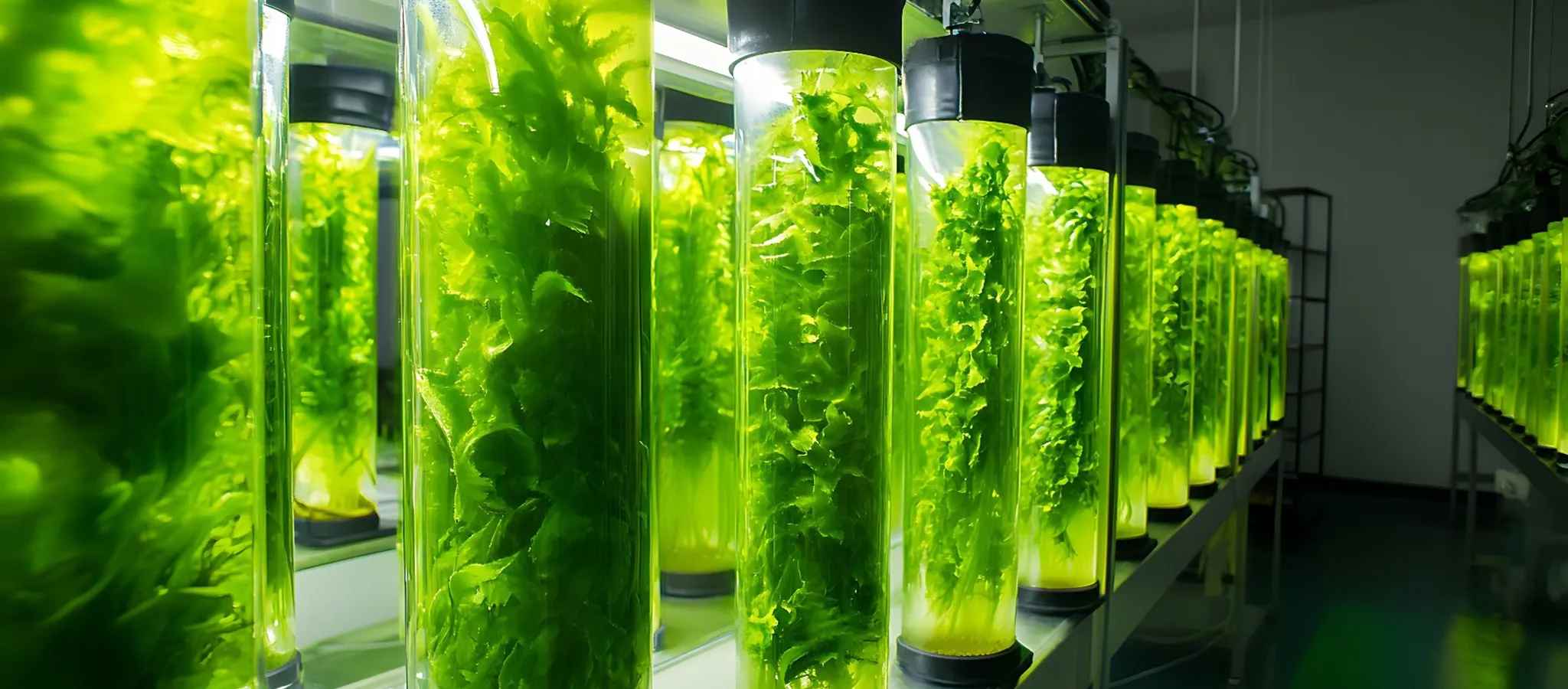
Resource Recovery and Environmental Asset Creation
Many of the world’s most challenging environmental liabilities share a common characteristic: they contain large quantities of carbon, nutrients, contaminated water or degraded biological systems that require significant expenditure to manage, remediate or restore. Historically, these liabilities have been treated as environmental costs.
GreenAi believes it can increasingly become an environmental asset. Algae-based systems represent one of the most promising biological platforms capable of simultaneously supporting carbon capture, water rejuvenation, resource recovery and ecosystem restoration while generating measurable environmental outcomes that may support future environmental asset structures.
Algae are among nature’s most efficient biological processors. Using sunlight, carbon dioxide and nutrients, algae can rapidly convert environmental pollutants into biomass, creating the potential to address multiple environmental challenges through a single integrated system.
Unlike many conventional environmental solutions that focus on one outcome, algae can simultaneously:
Around the world, algae systems are being explored in environments where large-scale environmental rehabilitation is required.
Potential applications include:
In these environments, algae can help reduce pollutant loads, improve water quality and support long-term ecosystem recovery while creating measurable environmental performance improvements.
Algae absorb carbon dioxide as part of their natural growth cycle and are widely recognised as one of the most productive biological carbon capture mechanisms available.
Potential sources include:
Unlike many conventional carbon reduction initiatives, algae systems can create additional environmental and commercial outputs beyond carbon capture alone.
Water quality is becoming one of the most critical environmental challenges globally.
Algae systems can support:
This is particularly relevant in regions where environmental degradation, industrial activity or nutrient loading have impacted natural water systems.
As algae absorb carbon and nutrients, they generate biomass that may be converted into a range of commercially valuable products.
Potential applications include:
This creates the potential for environmental remediation activities to generate recurring economic value rather than remaining purely cost-driven programmes.
For GreenAi, one of the most significant opportunities lies in the creation of measurable environmental outcomes capable of supporting environmental asset development.
Algae programmes have the potential to generate multiple layers of environmental value, including:
As environmental markets continue to evolve, projects capable of delivering multiple verified environmental benefits are expected to become increasingly attractive to investors, governments and corporate sustainability programmes.
Rather than relying on a single carbon outcome, algae projects may support broader environmental asset frameworks that reflect the full environmental value being created.
GreenAi is interested in algae not simply because it captures carbon, but because it demonstrates how a single environmental intervention can create multiple measurable outcomes across carbon, water, biodiversity, resource recovery and environmental restoration.
By combining sustainability intelligence, environmental measurement, digital verification, commercial structuring and environmental asset development, GreenAi aims to help transform biological remediation systems into scalable environmental and commercial opportunities.
GreenAi believes the future of environmental restoration lies not only in repairing environmental damage, but in creating measurable environmental assets that help finance, accelerate and sustain long-term recovery.
If you would like to explore how GreenAi can help unlock new revenue streams, reduce environmental liabilities and create measurable environmental value, contact Adrian Apperley on +66 (0) 81 751 8308 or
Dredged Material Recovery and Circular Construction Products The Opportunity Across...
Sustainable Algae – Environmental Remediation Resource Recovery and Environmental Asset...
Alberta Oil Sands Remediation Transforming Legacy Environmental Liabilities into Environmental...

Airport Environmental Fee Frameworks Turning airport environmental obligations into a...

Sustainable Digital Infrastructure and Environmental Asset Creation The Challenge Artificial...

Viscon Credits and Environmental Credit Integrity Building Trust, Transparency and...